


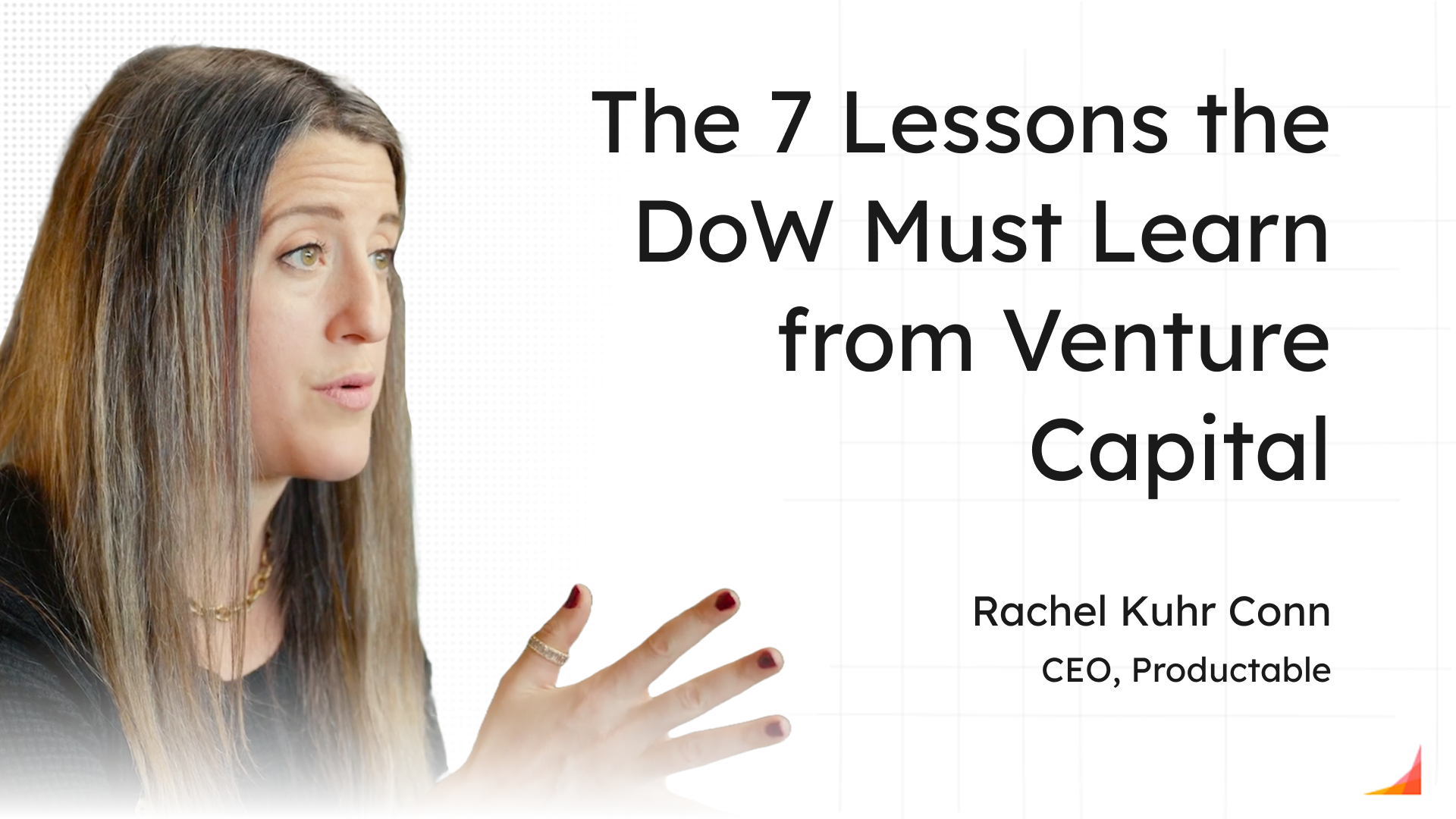
Secretary Hegseth has unveiled a revolutionary transformation of the Department of War acquisition system, and it's drawing heavily from a surprising source: venture capital best practices. Through our work transforming defense acquisition, we've identified 7 critical practices from the venture capital world that are reshaping how technology and solutions reach our forces.
Today's contractors spend countless hours guessing what's needed, working from long requirement checklists without understanding the "why" behind them. The new approach flips this script. Like venture capitalists who define their investment thesis upfront, the Department will establish clear demand signals: what problems need solving, what stage of development they're seeking, and how much they're willing to invest. This creates a simple yes/no tollgate rather than a feature-by-feature evaluation. Instead of checking features detail by detail, the focus shifts to solving problems. This enables our forces to access solutions we never would have dreamed of, with far more lethality because we didn't have to preemptively dictate exactly what we were looking for.
Currently, defense acquisition incentivizes the process. Solutions are selected because they're compliant and doing everything they said they would do. Rather than thinking about whether something creates value, all the time goes into checking compliance. The venture capital world asks a different question: what is the biggest risk associated with this solution, and how can we learn right now if it's going to solve our problems? By pushing risk and experimentation forward at the beginning, VCs figure out if something has legs before filling out the rest. With funding tied to traction and progress rather than process, the focus shifts to what actually works.
The Department of War has no stages today and no investment thesis, meaning every requirements owner is stuck trying to figure out whether they're investing in early or late solutions. Our recommendation is for the PAE approach to operationalize staged investment like VCs do: pre-seed, seed, Series A, B, and beyond. Different groups can focus on what they do best. Some invest in early ideas, others in prototypes, still others in scaling. They pass the ball to each other rather than trying to dribble across the entire field alone.
Perhaps most exciting is the shift toward solutions that work 85% now rather than waiting for the hundred percent solution. This opens up opportunities for technologies that can solve today's problems right now, with continued iteration based on what we learn. The Department can now bring experimentation methodology into exercises and operational opportunities, testing and learning at a rapid pace, low cost, and low threat.
Secretary Hegseth is revolutionizing how we think about acquisition by moving away from siloed work. With portfolio ownership, different portfolio owners can take on different stages of innovation. Think of venture capital as a sport where everyone has a position on the field. Idea investors stand on one side, and as you progress across the field, you see later-stage investors. Their goal is to take the ball and pass it to each other.
In the Department of War today, every player is trying to dribble their own ball across the field. In this future world, the Department can work more like venture capitalists, focused on where deals are coming from and where they're moving to. That deal flow motion is what creates the acquisition machine, the warfighting function of acquisition.
The future of defense acquisition looks less like bureaucratic procurement and more like a high-functioning investment machine with clear positions, smooth handoffs between stages, and relentless focus on outcomes.
The way the Department works today has no clarity on whether investments are successful, decisions are right, or solutions are stuck. In the venture capital world, portfolio owners live and die by their portfolio scorecards. At regular cadence, they meet with their limited partners, sharing how investments are performing and whether they're achieving outcomes.
To show that high-level progress, they run an internal cadence looking at investment decisions that need to be made, barriers companies need help with, and wins to double down on. This regular cadence of capturing data from the current portfolio drives standard data collection and ultimately leads to better results.
Instead of limiting competition to a handful of defense contractors, the new system creates a scouting engine. When venture capitalists think about who to invest in, they open up a wide range of potential companies. Rather than running bureaucratic processes to get everyone through, they have a very fast top-of-funnel experience where they can consider many different solutions. They add more compliance and process only as they get closer to investing, and only with companies showing promise.
This means companies can now audition for lots of different investment opportunities. The Department can look at a wide set of solutions, use the tollgate approach to make fast yes/no decisions, then double down as things show promise. By putting out the right demand signals, incredible matchmaking can happen at scale so the right solutions come to the right problems effectively.
Secretary Hegseth is empowering single accountable portfolio leaders who are judged on overall portfolio outcomes, not the success of every single project. If they can show their portfolio was overall successful with big wins, that's how they're determined to be successful.
Today, program owners tell stories to Congress to show success and secure continued funding. This has led to operational risk because decisions are based on storylines rather than data. In the new portfolio structure, Congress becomes the limited partners. Portfolio owners report back showing where they're 10x-ing versus 2x-ing, and Congress can allocate funding based on where we're seeing the most traction. This makes funding more fungible, driving toward the outcomes needed most.
This isn’t about turning the Department of War into a venture fund. It’s about giving leaders the tools, structures, and rhythms required to operate at the speed of conflict and outpace our adversaries.
Clear demand signals. Staged investment. Portfolio accountability. A real scouting engine. Cadence. Deal flow.
When these pieces come together, the DoW stops acting like a paperwork factory and starts acting like an investment organization built for warfighting outcomes.
This is the future of acquisition, and it’s already starting.
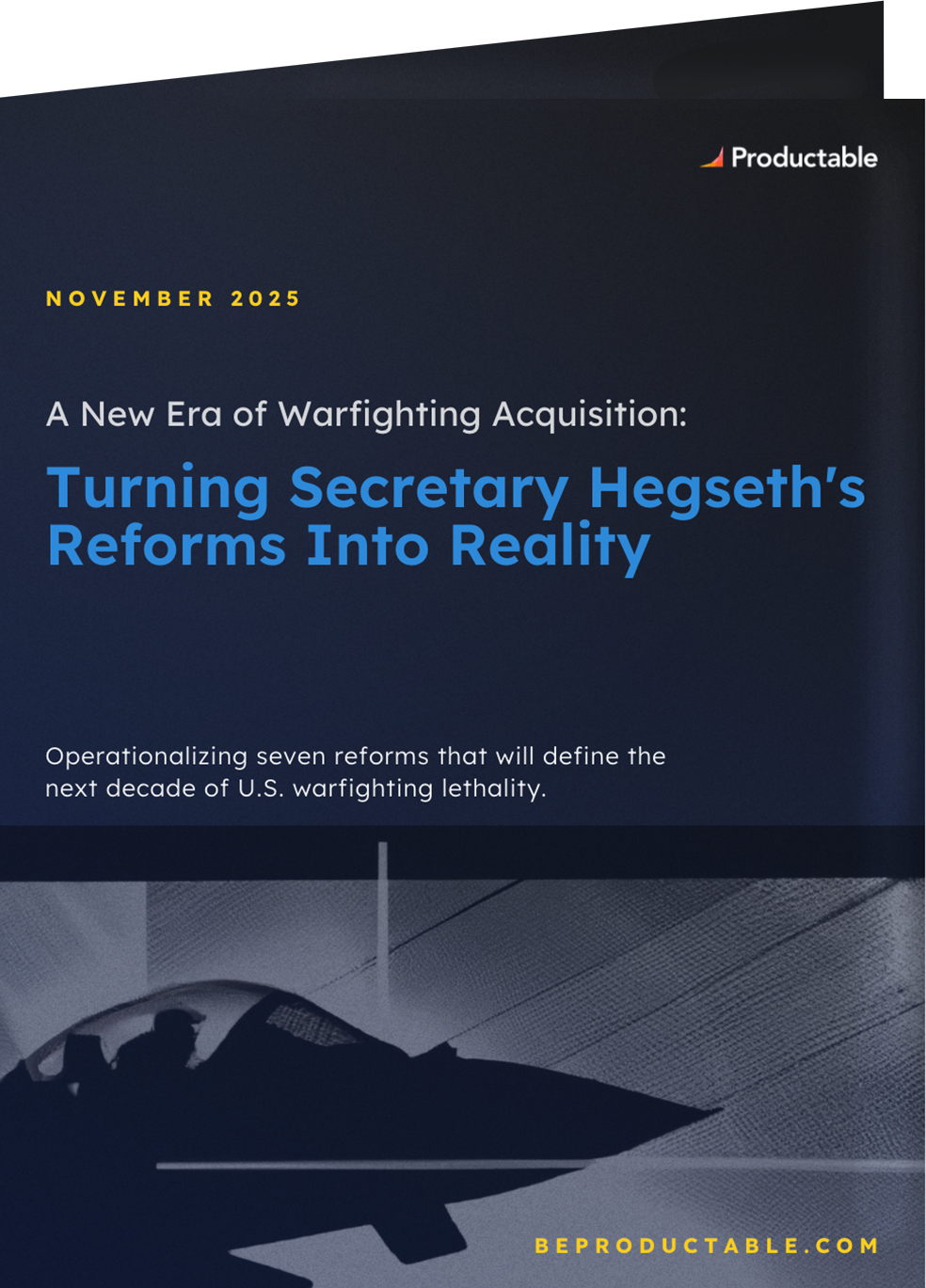
The Department of War is shifting from program-centric management to a disciplined portfolio investment model. Leaders now need tools that bring clarity, cadence, and investment rigor to complex acquisition environments. This guide is written for leaders who need practical tools to increase speed, strangthen readiness, and ensure resources flow to the most mission-critical capabilities.
Download the free strategic guide
.png)
.png)